Spotlight

No Peaceful Nuclear Power

Posted on 16/07/2009

The whole planet must be declared a nuclear-free zone.

President Barack Obama's declaration June 4 in his speech in Cairo that "any nation - including Iran - should have the right to access peaceful nuclear power" ignores a central issue. There is no "peaceful nuclear power." Nuclear weapons and nuclear power are two sides of the same coin.

1 comments | Read the full post

Barham Madain Ayub

Posted on 19/01/2009

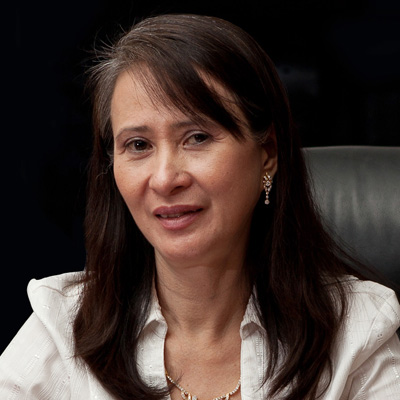
Current President of IAUP (2008-2011)               What have the benefits been for you since joining IAUP?     Barham: It means a lot of new knowledge that is happening in the world. A lot of new thoughts about cultural development affairs, and relations with higher educational leaders or presidents of very well known universities. So it has been a very good experience to learn more and to be a better president. This kind of international organization has some political goals like reaching peace and development through education. This of course, represents a good way to make this desire of internationalization real. I think one of the main interests to join is you can have some kind of way to concrete your social responsibility for the world and open opportunities for your instituition.

0 comments | Read the full post

Heitor Gurgulino de Souza

Posted on 18/01/2009

Current Secretary General of IAUP (2008 - 2011)
Heitor Gurgulino de Souza's latest subject for discussion is how Latin America should end its taboos and dogmas in Education, "During the Sixties, Asian countries showed similar educational indexes to ours. Nowadays, they exhibit a vertiginous educational advance. I lived in Japan for ten years when I was the Rector of the United Nations University. There I learned about the strong efforts made by both Japan and Korea to educate all of their population, since the middle of the 1800's and substantial resources were provided for education and training. That explains the high indexes of educational accomplishments that both countries have attained in recent years. And they continue to invest today a high proportion of their respective GDP in education and science.  Their societies have maintained in high regard  their fellow citizens that have chosen to become "teachers", at all levels of the educational process. And  their governments have also increased the salaries of teachers in order to attract the best minds to the teaching profession. Agreements were also reached with  private companies, schools and college systems  allowing more resources to be available for educational activities not only locally, but  at the level of the States/Prefectures and at the national level. Very good examples to be followed in most countries of the Latin  American region.

0 comments | Read the full post